
Module 5
Moving with Meaning: Body Awareness and Emotional Regulation
Many young people spend a lot of time "in their heads" - scrolling, worrying, or feeling the pressure to keep it together. This module explores how dance, movement, and body awareness help youth drop back into their bodies to feel calm, confident, and connected.
Developed by: YYSK
Introduction
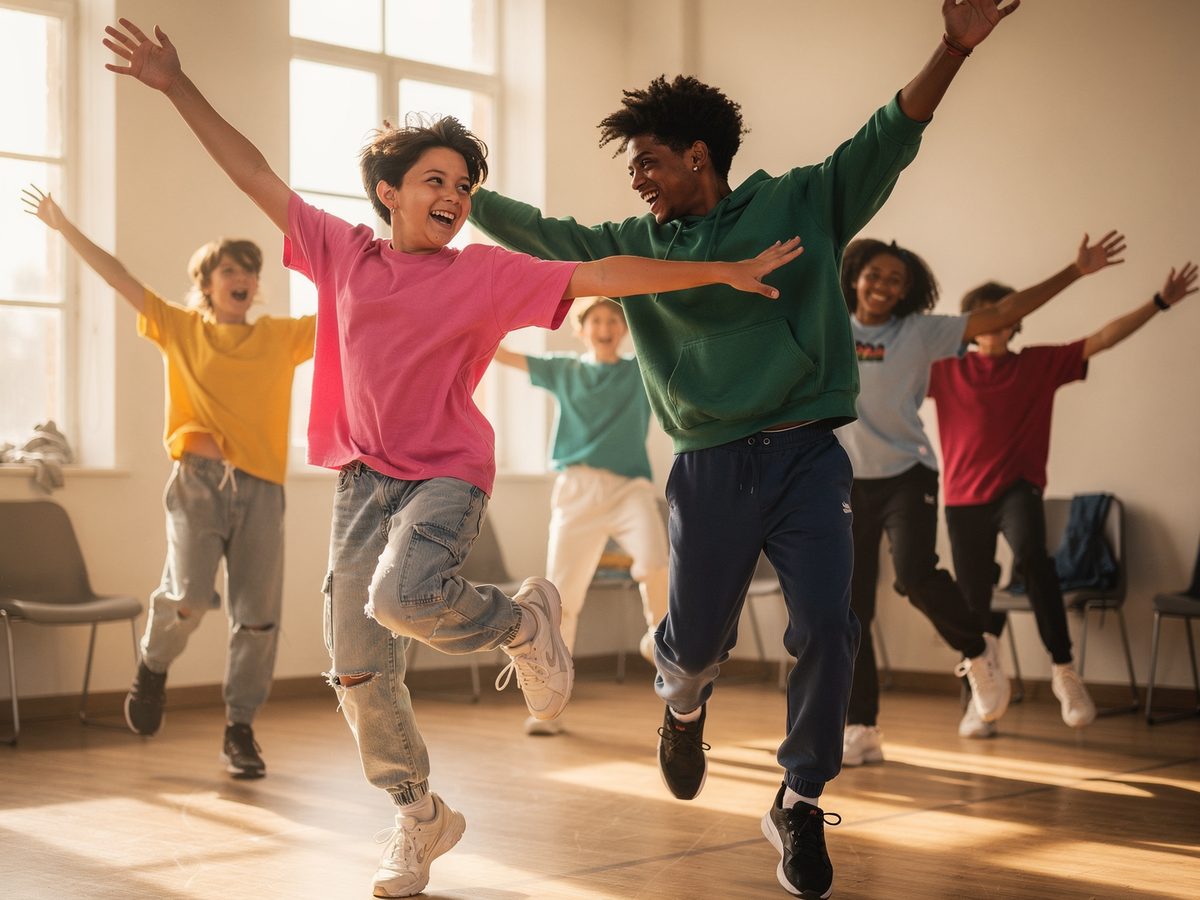
Many young people spend a lot of time "in their heads" - scrolling, worrying, or feeling the pressure to keep it together. This module explores how dance, movement, and body awareness help youth drop back into their bodies to feel calm, confident, and connected. We will look at how moving the body is not just about physical health, but a powerful tool for emotional regulation.
Key Concept
Art isn't just made with a brush; it is made with the whole self. Embodied expression recognizes that emotions are experienced not only in the mind but also in the body. For example, anxiety might feel like a tight chest, excitement like tingling hands, and sadness as heaviness in the shoulders. By paying attention to these sensations and expressing them through movement, individuals can better understand and regulate their emotional experiences.
Concept Explanation
Movement helps young people bridge the gap between their inner world and outer expression. When emotions are difficult to put into words, movement provides another way to communicate them. Moving with awareness strengthens proprioception (the body's ability to sense its position and movement) which can increase feelings of grounding and safety. Rhythmic movement can also support emotional regulation by calming the nervous system, reducing stress, and helping individuals shift from states of tension to states of relaxation and connection.
Activity Example
Mapping Your Inner Weather: A creative movement journey where participants identify their current emotional state as a "weather pattern" and use their bodies to transition from a "storm" to a state of "calm."
This activity encourages participants to identify emotions, externalize them through movement, and practice transitioning between emotional states. The weather metaphor helps young people recognize that emotions are temporary and constantly changing.
Materials Needed
- An open, safe space for movement.
- Music player with three tracks: one rhythmic/energetic, one calm/ambient, and one uplifting.
- Paper and colored markers for the reflection phase.
Step-by-Step Instructions
- Grounding: Stand in a circle; breathe in for 4 counts, out for 6. Ask: "What is your inner weather report (sunny, stormy, foggy)?"
- Warm-up: Move each body part slowly, noticing where it feels "heavy" or "light."
- Movement Journey: Play the rhythmic track; move like a "storm" with big gestures. Gradually fade into the calm track, bringing movements down to small, centered gestures.
- Stillness: End in silence with a hand on the heart.
Interactive Movement Prompt
Think of a feeling of Curiosity. Without using your face or voice, how can you show "curiosity" using only your hands and feet? Take 30 seconds to explore that movement.
Reflection Questions
Reflection
- Where in your body did you feel the "storm" most strongly?
- Did your emotional "weather" change during the activity? If so, how?
- What changed in your breathing when the music shifted to calm?
- How does moving your body feel different than just talking about your day?
Self-Check Exercise
- Scan your body right now. Identify where you feel the following sensations:
- Tension: (e.g., Shoulders or jaw)
- Energy: (e.g., Tapping feet or jumpy hands)
- Calm: (e.g., Deep belly or heavy feet)
- Emotions often show up in the body before we consciously recognize them. Taking a moment to notice physical sensations can help us understand what we are feeling and respond more effectively.
Quick Quiz
Question
How can movement help with emotional regulation?
Before revealing the answer, ask:
Think back to the "Inner Weather" activity. What changed in your body as you moved from the "storm" to the "calm"?
Did moving help you understand or express your feelings in a different way than talking about them?
What happened to your breathing, muscle tension, or energy levels during the movement journey?
Why do you think movement is often used in activities that support well-being and stress management?
Correct: B)
Movement helps us become aware of what we are feeling physically and emotionally. By expressing emotions through movement, we can release tension, regulate our energy, and develop a stronger connection between our body and mind.
Facilitator Tips
Model Vulnerability: If you move with expressive, imperfect gestures, youth will feel less self-conscious.
Inclusive Language: Use phrases like "Move in your own way" or "Small movements are just as powerful."
Watch for Cues: If someone looks overwhelmed, invite them to ground by pressing their feet into the floor.
Participation is Optional: Encourage engagement, but remind participants that observing is also a valid form of participation. Some young people may need time before they feel comfortable expressing themselves through movement.
Additional self-help resources
Interactive practice resource
Module practice pack 5
- Knowledge check, scenario and practice challenge
- Open module activities 5
- Use the questions and scenario to prepare a safe, inclusive arts-based youth-work session.