Module 6
Peer Power in Creative Action
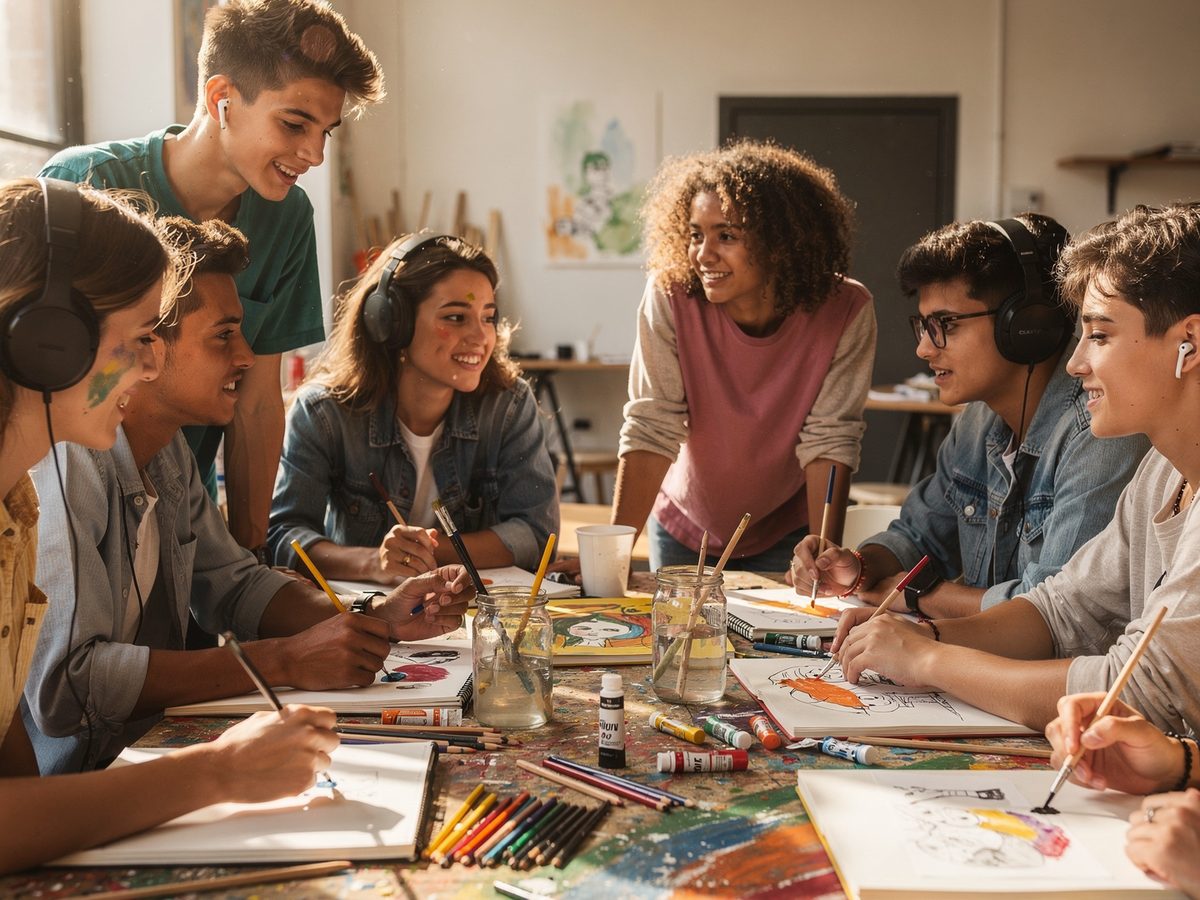
This module focuses on the power of peer-led collaboration. When young people create collectively, they move beyond producing art to sharing ideas, negotiating differences, and building a sense of belonging.
Developed by: COMP
Introduction
This module focuses on the power of peer-led collaboration. When young people create collectively, they move beyond producing art to sharing ideas, negotiating differences, and building a sense of belonging. The youth worker's role shifts from a director to a guide, trusting the group to own the creative process.
Peer learning encourages young people to take responsibility for their own learning and the learning of others. When youth teach, explain, or model ideas for their peers, they develop leadership, communication, and problem-solving skills. At the same time, participants often feel more comfortable experimenting and taking creative risks when they are supported by people their own age.
Why Peer Learning Matters
Collaborative art lowers the pressure on individual performance. Because youth know their contribution is part of a bigger picture, they feel freer to express themselves. Peers learn to listen, share resources, and build empathy in a space where cooperation replaces competition.
Method Description
Peer facilitation works by allowing young people to guide discussions, ask questions, and support group decision-making. Rather than providing answers, peer facilitators create opportunities for others to contribute ideas and perspectives. This approach helps participants feel ownership over the creative process while building confidence in their ability to lead and collaborate.
Example Peer Activity
The Visual Storytelling Chain - A collaborative drawing project where a youth leader guides the group through a "chain reaction" of creativity. Each participant adds one drawing that continues the story based only on the image created by the person before them.
This activity encourages active listening, adaptability, and shared ownership. Because each participant builds on someone else's contribution, the group learns to embrace uncertainty and view creativity as a collaborative process rather than an individual achievement
Materials Needed
- Long strips of paper or individual sheets numbered in order
- Markers, pens, or crayons
- A "Mystery Box" containing simple prompts (e.g., "a hidden key," "a sudden storm") to help if the story gets stuck
Step-by-Step Instructions
- The youth leader draws the first scene (e.g., a person walking toward a strange door).
- Each peer adds one drawing that continues the action, based only on what the person before them created.
- If the story gets "stuck," the leader facilitates a quick group huddle to decide the next plot twist.
- The group lays the drawings out to see the full "Mirror of their Collective Imagination".
Interactive Discussion Prompt
As a youth worker, how does it feel to step back and let a young person take the lead? Have you ever witnessed a moment where a group of youth solved a creative problem faster because an adult wasn't directing them?
Scenario Activity
The Challenge: Halfway through the storytelling chain, a participant adds a very "dark" or confusing image that doesn't seem to fit the story. The next person in line is frustrated and says, "They ruined the story! I don't know what to draw now."
The Action: As the youth worker, you support the peer leader to ask: "In art, there are no mistakes, only new directions. What if this 'dark' moment is a mystery for us to solve together? How can we draw a way out of it? Can anyone suggest how the next few drawings could help us bridge this dark part back to the rest of our story?"
Reflection Questions
Reflection
- How did the group negotiate the "plot twists" without using words?
- Did you notice any cultural symbols or personal "codes" appear in the drawings? How did the group react to them?
- What was the emotional impact of seeing the final, connected story?
- Was there a moment when someone else's idea changed the direction of the story? How did that feel?
- How did sharing responsibility for the story affect the group's creativity?
Facilitator Tips
- Trust the "Mess": Remind the youth leader that a "messy" plot is often more creative than a perfect one.
- Pairing for Support: In mixed-ability groups, suggest the peer leader pairs a confident artist with a hesitant one to co-create a "chapter".
- Model Openness: If the story takes a weird turn, be curious rather than trying to steer it back to "normal".
- Pause Before Stepping In: Resist the urge to solve creative disagreements immediately. Give the peer leader time to facilitate discussion and encourage the group to generate solutions before stepping in.
Knowledge check – peer facilitation
Quiz
During a shared story activity, a participant adds an unexpected dark drawing. What is the most supportive response?
Additional self-help resources
Interactive practice resource
Module practice pack 6
- Knowledge check, scenario and practice challenge
- Open module activities 6
- Use the questions and scenario to prepare a safe, inclusive arts-based youth-work session.